

Between Cambridge and Ipswich lies a collection of attractive towns and villages, each with its own fascinating history and distinctive character. Over the years, TrailTale has explored many of these communities, creating self-guided heritage trails that reveal stories and landmarks often overlooked by visitors—and sometimes even by local residents.
Among them is Haverhill, one of Suffolk’s most intriguing market towns.
While Haverhill has expanded significantly in recent decades, its history stretches back far beyond living memory. The town was already an important settlement during Saxon times and has continued to evolve through the centuries, leaving behind a wealth of stories waiting to be discovered.
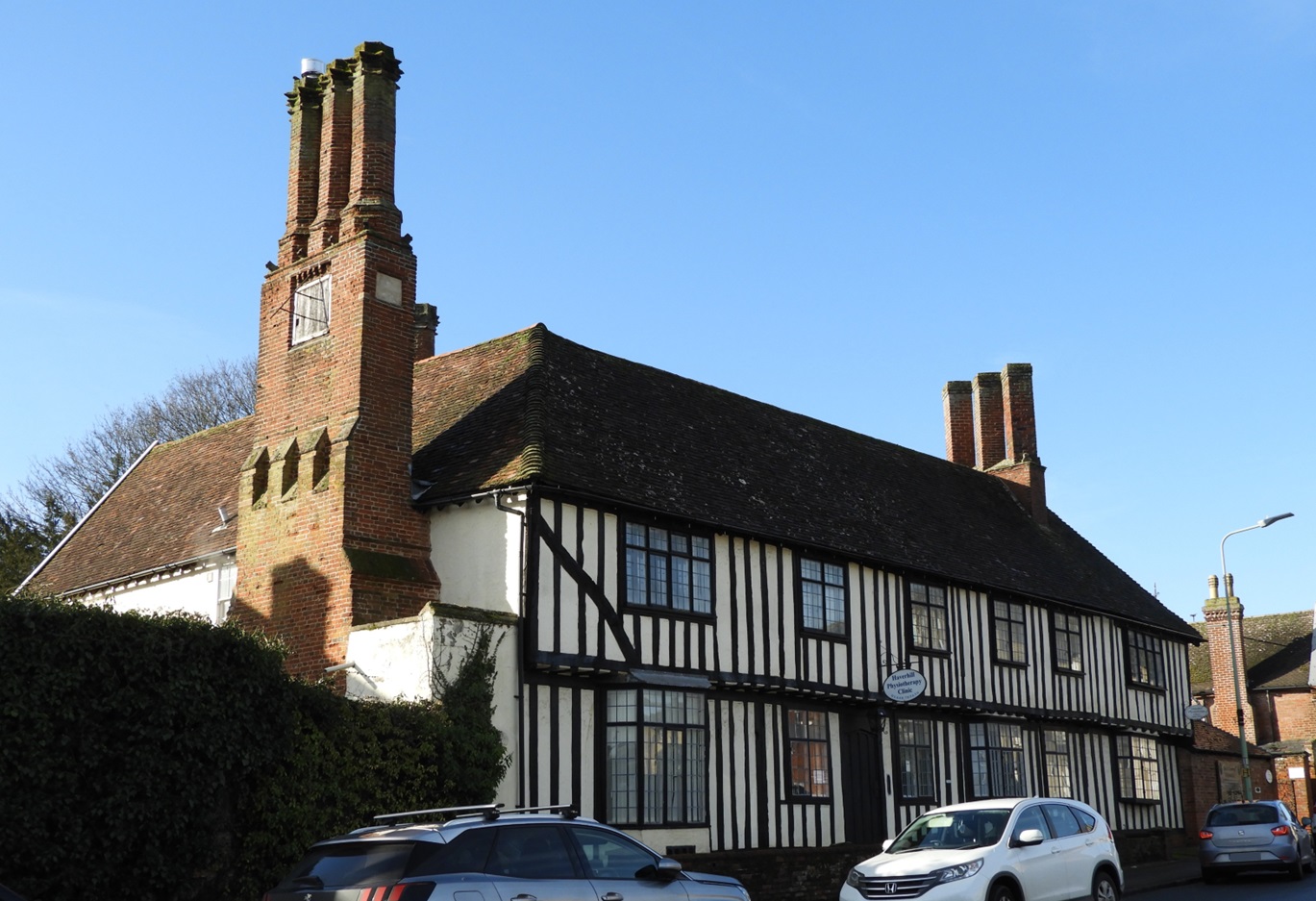
One of Haverhill’s most famous historic buildings is the Anne of Cleves House. Although there is no evidence that Anne herself ever visited or had any connection with the property, it remains one of the town’s finest examples of Tudor architecture and offers a glimpse into life during the sixteenth century.
As you explore the trail, you’ll uncover many lesser-known stories. A short distance from the town centre stands a row of distinctive houses with unusually long front gardens. Today they appear to be ordinary homes, but they tell the story of Haverhill’s once-thriving weaving industry. During the Victorian era, silk weaving was one of the town’s principal trades. The ground floors of these properties served as workshops, while the upper floors housed the weavers and their families. Although the looms have long since disappeared, the buildings still reflect this important chapter in the town’s history.
Elsewhere, standing beside the modern Tesco superstore, it is difficult to imagine that this area once looked entirely different. Here stood Haverhill’s railway station, a workhouse, and a substantial mill—key features of the town’s Victorian landscape. Today little remains except a few street names and the stories preserved through local history.
Then there is the mystery of Castle Lane. At first glance it seems an ordinary residential street, with no sign of battlements, towers, or defensive walls. Yet the name hints at a lost castle. Did Haverhill once have one? Local tradition suggests it did, with the site believed to have stood around two miles west of the present-day lane.
The High Street is packed with fascinating details for those willing to look a little closer. Raise your eyes and you’ll spot historic stone inscriptions above a building side wall, reminders of the Barclays Bank branch that once traded here. Discover the gateway to the former Chauntry Mills and, hidden in plain sight, the carved stone head of a hound—the last surviving reminder of the historic Hound Hotel that once occupied the site.
No visit would be complete without stopping at the Arts Centre, home to Haverhill’s museum. Though modest in size, it contains a wealth of exhibits that help bring the town’s rich history to life.
These are just a few of the many stories featured on the Haverhill Heritage Trail. Whether you’re interested in medieval history, local industry, lost railways, or hidden architectural details, the trail offers a fascinating way to explore the town.
Why not set aside a few hours to discover Haverhill for yourself? Follow the trail, uncover its hidden stories, and enjoy the cafés, pubs, shops, and attractions that make the town such an enjoyable place to visit.
Download the TrailTale app, search for “Haverhill Heritage Trail”, and experience a side of Haverhill that many visitors never get to see.